




Monthly Archives: October 2021
Rex-Ospreys XRP ETF set for September 18 debut after delay
When comparing the costs of trading spot bitcoin ETFs versus purchasing and storing bitcoin yourself, it’s essential to consider the annual fees. While the short-term costs of trading ETFs may be lower, the expense ratios over time could make owning it more costly. While there are ways for ETFs and investors to recover their assets in the event of a Coinbase bankruptcy, it may not be immediate or automatic. Consider custodianship risks when looking for a spot Bitcoin ETF to avoid these risks.
- 1 This pool of assets is professionally managed, and investors don’t have to research and purchase each of these assets individually.
- Some brokerage accounts don’t allow users to invest directly in cryptocurrency.
- They function similarly to traditional ETFs but focus specifically on BTC as the underlying asset.
- Additionally, ETF management involves fees, such as expense ratios, which can impact overall returns.
- Bitcoin’s price was already rising in the weeks leading up to the spot bitcoin ETF announcement—and a “sell the news” moment happened in the wake of the approval.
Ethereum spot ETFs tend to offer better liquidity, lower fees and more transparent pricing, making them a preferable option for many people. ETFs have become commonplace because they offer a streamlined way to bet on the price of assets that may be challenging for some to hold directly. Their appeal lies in their ability to offer liquidity and ease of trading, similar to shares of a stock, while tracking the value of a basket of assets that underpin them. Many investors wonder how a spot bitcoin ETF will affect the market, bitcoin price, liquidity, adoption and demand. BlackRock’s iShares Bitcoin Trust is similar in structure to SPDR Gold Shares (GLD), the largest gold ETF by asset under management.
Monitor the Performance
Investors who put money into bitcoin ETFs do not own any bitcoin outright, and financial firms will charge fees for trading and managing a bitcoin ETF. There are no costs for managing the investment when buying bitcoin directly, but people who buy bitcoin directly pay a transaction fee. Betashares Crypto Equities offers a unique way to invest in the crypto economy. This ETF is designed to track the performance of the Bitwise Crypto Innovators Index.
A digital asset ETF, for example, would allow investors to invest in the underlying digital asset without needing to manage the asset itself or interact with a cryptocurrency exchange. A Spot Bitcoin ETF is designed to track the actual, real-time price of Bitcoin by holding Bitcoin as its underlying asset. When investors buy shares of a spot Bitcoin ETF, the fund uses the proceeds to purchase actual Bitcoin and holds it in secure custody, often with institutional-grade custodians.
Counterparty Risk
As the cryptocurrency market evolves, spot bitcoin ETFs are poised to play a pivotal role in bridging the gap between traditional finance (“TradFi”) and the digital asset world. This can be a solo or joint brokerage account, or even an IRA – the same as you’d use for stocks or mutual funds. Enter the introduction of spot bitcoin ETFs—a financial product that offers the excitement of cryptocurrency investing with the simplicity of traditional stock trading.
Bitcoin strategy ETFs, for example, attempt to track the price of Bitcoin indirectly. This discrepancy can result from market conditions like contango, where futures prices exceed spot prices, or backwardation, where futures prices are lower. On Wednesday, January 10, 2024, the SEC approved the first spot bitcoin ETFs for launch in the US, a notable milestone in the history of crypto.
- A Spot Bitcoin ETF (Exchange Traded Fund) operates by closely mirroring the current price of Bitcoin, offering investors a way to partake in Bitcoin investment through traditional financial systems.
- Examples are hypothetical, and we encourage you to seek personalized advice from qualified professionals regarding specific investment issues.
- An ETF is traded on major exchanges, similar to stocks, and can be bought and sold throughout the trading day at prices that are in line with the underlying asset.
- On Wednesday, January 10, 2024, the SEC approved the first spot bitcoin ETFs for launch in the US, a notable milestone in the history of crypto.
Understanding How Spot Bitcoin ETFs and Bitcoin Futures ETFs Work
The value of the shares of the ETF is tied directly to the price of ether in the spot market. Investors can buy and sell shares of the ETF through traditional brokerage accounts, just like any other stock or fund. The ETF is structured such that the price of its shares should move in tandem with ether’s spot price as closely as possible. A spot ETF, short for exchange-traded fund, is a type of fund bitcoin trademark and domain sold that directly tracks the price of an underlying asset, such as a commodity or cryptocurrency, by holding it in reserve. Unlike a futures ETF, which is based on contracts speculating on future prices, a spot ETF reflects the real-time value of its asset.
Transaction costs include brokerage fees and annual expense ratios for operational costs, which are automatically deducted. The ETF’s price may fluctuate from its Net Asset Value (NAV) due to supply and demand, but authorized participants can create or redeem shares to align the ETF price with the NAV. Trading is subject to the market hours of the exchange where the ETF is listed.
Step 6: Keep Close Tabs on Market Events
Owning bitcoin also means you can send the bitcoin to others through the blockchain, or pay for goods and services from vendors who accept it. And while you can technically gift your shares to someone else, it’s not as practical as simply sending friends or family some bitcoin. These factors may make those who are unfamiliar with crypto’s nuances hesitant to invest. They can also make it harder for financial advisors to incorporate crypto into an investment plan for clients. In May 2024, the SEC approved eight spot Ether ETFs for trade on the NYSE, Nasdaq, and CBOE BZX exchange. Your investment style can dictate which kind of fund is best for your portfolio.
Investors are limited to trading a spot Bitcoin ETF within traditional market hours for regulated securities exchanges, unlike crypto markets which trade 24/7. Spot ETFS typically track the spot price of the underlying asset, which is the current market price for immediate delivery. Purchasing ether directly gives investors full control over the asset, including the ability to use them in decentralized applications (dApps) and transfer them to other people.
Crypto Future
Analysts also believe that RLUSD’s growth and adoption may lead to more demand for XRP. The institutional focus in particular may flame the embers of institutional demand/adoption, especially once XRP ETFs receive regulatory approval. The main reason for the ETF chatter was that most of the companies that submitted applications are scheduled for decision dates in October. However, the latest XRP news revealed that the ETF expectations were validated by Germany’s stock how to buy taas exchange. Overall, the XRP market positioning was split between whales and retail ahead of the approval and trading of the first U.S. spot ETF.
Exchange-traded funds are a practical way to invest in a broad market index or diversify into specific investments and sectors. Although they share a lot of similarities with mutual funds, ETFs also encompass many advantages of stocks, such as being traded over open exchanges and improved tax efficiency. Instead, they invest in Bitcoin futures contracts, which are agreements to buy or sell Bitcoin at a future date for a predetermined price. Futures Bitcoin ETFs track the price of Bitcoin indirectly based on these contracts, and their performance may differ from the spot price of Bitcoin due to the nature of futures markets. For those investors hesitant about the security and regulatory risks of direct cryptocurrency ownership, Bitcoin ETFs offer a sense of assurance.
The Future of Bitcoin ETFs
The GLD ETF was a major shift in how investors could purchase gold and opened up gold buying to the masses while increasing gold market volumes and overall liquidity. Bitcoin could go through a similar shift once there is more regulatory clarity through the approval of a spot bitcoin ETF. The ability to purchase and redeem creation units gives ETFs an arbitrage mechanism intended to minimize the potential deviation between the market price and the net asset value of ETF shares. The most active ETFs are very liquid, with high regular trading volume and tight ipv4 vs ipv6 whats the difference and why should you care bid-ask spreads (the gap between buyer and seller’s prices), and the price thus fluctuates throughout the day. This is in contrast with mutual funds, where all purchases or sales on a given day are executed at the same price at the end of the trading day. Bitcoin has evolved from a niche experiment to a mainstream asset, driving the development of investment vehicles that enable individuals to gain exposure to Bitcoin without directly holding it.
Style ETFs
ETPs, however, are not subject to this Act, and as such, generally don’t have diversified holdings like traditional ETFs. And how are they different from spot trading bitcoin and other crypto assets? Let’s explore the key differences and what to consider from an investing standpoint. For much of 2023, crypto enthusiasts hoped for the approval of a spot bitcoin exchange-traded product (ETP). Some believed it would bring enough new money to the crypto industry to save it from 2022’s bitter bear market. Security is always a concern for cryptocurrencies, even when they are held by investment firms.
The best ways to automate your accounting processes in 2026: Maximizing accuracy & speed
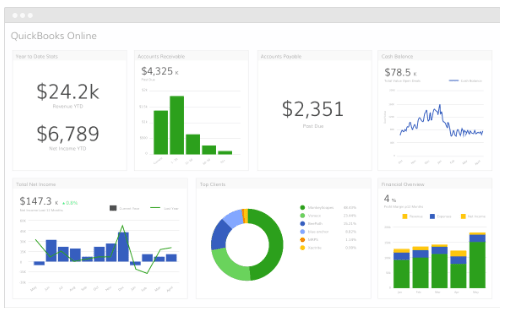
ML algorithms help in automating audit processes, reducing human error and increasing the scope of audit samples. Cutting-edge technologies are transforming accountancy practices in 2025. These innovations streamline workflows, enhance accuracy, and provide deeper insights for financial decision-making. User feedback and changing industry regulations can guide process improvements.
How to automate accounting processes
- This automation ensures your business stays in compliance for potential audits and prevents finance teams from chasing down missing documentation.
- Effective automation platforms provide flexible workflow design capabilities that adapt to these specific needs without extensive custom coding.
- An AI-driven accounting automation software add-on enhances accuracy and reduces errors, compared to a manual accounting system.
- The workspace is connected and allows users to assign and track tasks for each close task category for input, review, and approval with the stakeholders.
- Meanwhile, employee reimbursement and AP automation tools handle the bulk of cash flow management.
- Automation improves financial reporting by ensuring the underlying data is accurate and up-to-date.
- Businesses are replacing slow, manual AP processes with automation to cut costs, reduce errors, and improve cash flow.
Our proven solution integrates seamlessly into your platform, providing a ready-to-launch invoice and payments experience that delivers immediate value. Large numbers of CFOs are already using AI across finance functions, but they are carefully sequencing adoption based on risk and control. Your monthly software subscriptions, rent, utilities—these hit the same categories every time. Dext offers over 30 accounting software integrations and connects with over 11,500 banks and institutions.
Cash Flow
Implementing consistent maintenance routines keeps automated systems running smoothly. Daily checks should include monitoring system uptime and reviewing error logs. Successful automation of accountancy practices requires careful planning and execution. Firms must map processes, transition methodically, and train staff effectively to realize the full benefits of automated systems. Tools like Wave create real-time data and link it with bank accounts to automatically classify spending.
- The software automatically identifies discrepancies in data and by identifying entries from invoices, forms, and bank statements using AI automates data extraction and entry process.
- My advocacy for automation throughout my career has never led to replacement.
- Investigate accounting software that integrates with your existing financial stack and general ledger while offering the specific features your team needs most.
- Our article tackles this core question facing businesses in the digital age.
- Bank statement reconciliation can be automated through matching algorithms that compare transaction records across multiple accounts and flag discrepancies for review.
- Automating your AR and AP will save time, reduce risks and the need for manual data entry.
Integration
This automation eliminates errors common in manual processes and allows accounting professionals to focus on analysis and strategy rather than data entry. Brex is accounting automation software that uses artificial intelligence to handle routine financial tasks for companies ranging from early-stage startups to large enterprises. The software automates expense categorization, transaction reconciliation, and payment processing, reducing the manual work typically required in corporate accounting departments.
- Cash flow forecasts have typically been manually produced in an Excel spreadsheet by firms or an accounting department.
- Yet, the barriers to embracing automation extend beyond just the time commitment.
- Close the books 4x faster, collect over 95% of receipts on time, and get 100% visibility over company spending.
- This guide evaluates ten leading accounting automation platforms across document processing, transaction categorization, workflow automation, and AI capabilities.
- Data entry errors end up being commonplace due to the manual handling of large volumes of data, leading to discrepancies in financial reporting and analysis.
Additionally, our acquisitions have become more sophisticated and more globally diversified. Tipalti can quickly spin up a new subsidiary, and nothing will go missing. A financial management system with a good track record means it has been in operation for some time and is likely to deliver on its promises. Not everyone in the company should have access to specific financial automating accounting records, particularly those containing sensitive client data.

Why Need Accounting Automation?
- However, reminders can be helpful too—and you can even set them up to remember to make bank deposits.
- Collaborating where the work is happening will reduce confusion, save time, and reduce context-switching.
- It will also help to communicate the process to team members and stakeholders.
- The benefit here is automation can help you plug and play different apps in real-time to customize and automate just about any manual accounting workflow.
- Each expense syncs to your accounting software with real-time visibility and a digital audit trail.
- One such example is a financial planning & analytics app called Jirav which helps automate the financial modeling process.
Automation simplifies client management, from document collection and e-signatures to real-time In-House Accounting vs. Outsourcing communication and task tracking. By reducing wait times and making interactions seamless, firms strengthen client relationships, improve satisfaction, and build a reputation for top-tier service. Manage your end-to-end accounting – right from invoicing to inventory & expenses with our cloud accounting software. With solutions like MentorPOS powering automated accounting, restaurants don’t just close books faster.They run smarter businesses. POS–Tally integration transforms accounting from a manual chore into an automated process.
User Interface and Complexity
The technology has advanced rapidly in recent years, moving from simple rule-based processes to sophisticated solutions powered by artificial intelligence and machine learning. As companies face more pressure to do more with less while increasing accuracy https://kradiotv.com/trade-payables-a-guide-for-uk-businesses/ and compliance, automation is now a necessity for today’s finance departments. This article explores how accounting automation works, its benefits, applications, and future potential for businesses of all sizes. By leveraging advanced technology, these systems reduce manual work, enhance accuracy, and improve overall productivity.

How to Allocate Multiple Shopify Store Payouts to Different Bank Accounts
Integration ecosystem depth with accounting platforms determines end-to-end automation potential. Native connectors for Xero, QuickBooks, and other accounting systems enable automated data flow without manual export-import. API availability allows custom integrations with practice management systems, CRMs, and proprietary tools. It’s true that accounting automation can improve your workflow, however, there are always challenges present when introducing new software into your business processes. Onboarding might be a pain, but automating accounting will save time and reduce errors once set up properly.
Why use accounting automation software?
Upgrade your business operations with modern software solutions tailored to your needs. Monitor automated job performance continuously and make necessary modifications to increase accuracy and efficiency. To guarantee that everyone on the team can use the program efficiently without requiring a lot of training, use tools with a clear, user-friendly design. Verify if the program conforms with data protection laws like the GDPR and employs encryption. Prioritizing security is crucial, particularly if you handle sensitive financial data.